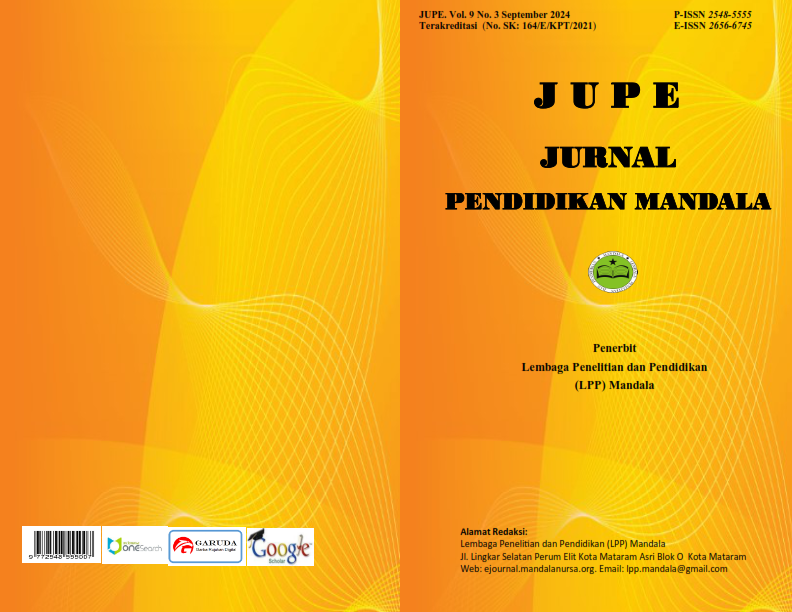
Development of E-Earning Learning Media Based on the Kahoot Application in Geography Subjects
DOI:
https://doi.org/10.58258/jupe.v9i3.7469Keywords:
Media development ADDIE Kahoot application E-learningAbstract
Learning media is a very important component of learning resources in the learning process. This research aims to develop e-learning media based on the Kahoot application in geography subjects regarding rural and urban spatial interactions. This research uses the ADDIE development research method which consists of five stages, namely the analysis stage, the design stage, the development stage, the implementation stage, and the evaluation stage. The research results showed that the media expert validation score was 85%, the material expert validation score was 83%, the teacher validation score was 85%, and the average student response score was 97.81%. The scores resulting from validation by experts and the student response scores show that the Kahoot-based Elearning learning media in the geography subject on topic of Village and City Spatial Interaction is categorized as very valid and suitable for use in the learning process.References
Darung, A., Setyasih, I., & Ningrum, M. V. R. (2020). Pengembangan Media Pembelajaran Geografi Menggunakan Poster Infografis (Materi Dinamika Atmosfer). Jurnal geoedusains, 1(1).
Fitriyah, I., Wiyokusumo, I., & Leksono, I. P. (2021). Pengembangan Media Pembelajaran Prezi dengan Model ADDIE pada Mata Pelajaran Simulasi dan Komunikasi. Jurnal Inovasi Teknologi Pendidikan, 8(1). https://doi.org/10.21831/jitp.v8i1.42221
Ginting, D., & Harahap, D. A. (2020). Pengembangan Media Pembelajaran (Aplikasi Kahoot) Bagi Guru SMA Negeri 2 Tanjungbalai. Prosiding Seminar Nasional Multidisiplin Ilmu Universitas Asahan ke-4 Tahun 2020 Tema:”Sinergi Hasil Penelitian Dalam Menghasilkan Inovasi Di Era Revolusi 4.0”. Seminar Nasional Multidisiplin Ilmu Universitas Asahan ke-4 Tahun 2020 Tema:”Sinergi Hasil Penelitian Dalam Menghasilkan Inovasi Di Era Revolusi 4.0”, Kisaran.
Irwanita, D., Nefilinda, & Putri, R. E. (2023). Pengembangan Media Pembelajaran Visual Berbasis Aplikasi Canva Terhadap Minat Belajar Siswa pada Mata Pelajaran Geografi di Kelas X IPS SMAN 2 Dayun, Kabupaten Siak. El-Jughrafiyah, 03(01).
Khairini, R., & Yogica, R. (2021). Pengembangan Media Pembelajaran Interaktif Berbentuk Android Packaging Kit (APK) pada Materi Virus. Jurnal Penelitian dan Pengembangan Pendidikan, 5(3), 406. https://doi.org/10.23887/jppp.v5i3.38502
Khotimah, A. K., Soelistijo, D., Putra, A. K., & Kristanti, Y. A. (2023). Learn Earth Rotation and Revolution: Pengembangan Media Georotation untuk Pembelajaran Digital Geografi. Jurnal Praksis dan Dedikasi Sosial (JPDS), 6(1), 73. https://doi.org/10.17977/um032v6i1p73-84
Muhson, A. (2010). Pengembangan Media Pembelajaran Berbasis Teknologi Informasi. Jurnal Pendidikan Akuntansi Indonesia, 8(2). https://doi.org/10.21831/jpai.v8i2.949
Nugraha, R. G. A. (2017). Pengembangan Media Interaktif Berbasis Adobe Flash CS4 Professional pada Pembelajaran Tematik untuk Siswa Kelas 2 SD. Scholaria: Jurnal Pendidikan dan Kebudayaan, 7(2), 94. https://doi.org/10.24246/j.scholaria.2017.v7.i2.p94-105
Nurbaetina, & Roviati, E. (2021). Pengembangan Media Pembelajaran Berbasis Kahoot pada Materi Ruang Lingkup Biologi SMA/MA X. Jurnal Bio Educatio, 6(1). https://doi.org/10.31949/be.v6i1.2650
Nurfadillah, S., Azhar, C. R., Aini, D. N., Apriansyah, F., & Setiani, R. (2021). Pengembangan Media Pembelajaran Berbasis Teknologi untuk Meningkatkan Hasil Belajar Siswa SD Negeri Pinang. BINTANG: Jurnal Pendidikan dan Sains, 3(1).
Pangestu, A. R., Purwanti, A., & Rosanti. (2021). Pengembangan Media Pembelajaran Berbasis Video Animasi Stop Motion Pada Mata Pelajaran Geografi. Geodika: Jurnal Kajian Ilmu dan Pendidikan Geografi, 5(2), 216–225. https://doi.org/10.29408/geodika.v5i2.3807
Rasyid, M., Azis, A. A., & Saleh, A. R. (2016). Pengembangan Media Pembelajaran Berbasis Multimedia dalam Konsep Sistem Indera pada Siswa Kelas XI SMA. Jurnal Pendidikan Biologi, 7(2).
Saputra, I. A., & Maliki, R. Z. (2021). Pengembangan Media Pembelajaran Geografi Berbasis Augmented Reality. Jurnal Spasial, 8(2).
Sari, I. Y., Nuranisa, & Idris, M. (2023). Pengembangan Media Pembelajaran Materi Interaksi Sosial dengan Ispring Suite 8 pada Mata Pelajaran IPS (Geografi) di SMP Negeri 35. Jurnal Swarnabhumi, 8(1).
Suarsini, N., Wesnawa, I., & Kertih, I. (2020). Pengembangan Media Pembelajaran Geografi Berbasis Media Sosial Instagram untuk Peningkatan Motivasi dan Hasil Belajar Siswa. Jurnal Pendidikan IPS Indonesia, 4(2).
Tanjung, N. Y., & Delita, F. (2022). Pengembangan Media Pembelajaran Video Animasi Pada Materi Vulkanisme Kelas X di Pondok Pesantren Daarul Muhsinin Labuhan Batu. Journal of Digital Learning and Education, 2(1), 13–21. https://doi.org/10.52562/jdle.v2i1.250
Widia, F. R., Tanamir, M. D., & Afryansih, N. (2023). Pengembangan Media Pembelajaran Mit App Inventor Dalam Meningkatkan Pemahaman Siswa Pada Mata Pelajaran Geografi. Journal on Education, 05(04).
Wijayanti, A., Lestari, W. F., Zahroini, A. L., Puspitasari, A. S. D., Pradana, A. S. N., & Ulya, C. (2022). Pengembangan Media Pembelajaran Interaktif Berbasis Aplikasi Powtoon & Quizizz dalam Pengajaran Teks Eksplanasi di SMA. Jurnal Pendidikan, Sains Sosial, dan Agama, 8(1), 202–212. https://doi.org/10.53565/pssa.v8i1.449
Wijayanti, D., Astina, I. K., & Bachri, S. (2019). Penggunaan Media Peta Berbasis Web untuk Pembelajaran Geografi SMA. Jurnal Pendidikan: Teori, Penelitian, dan Pengembangan, 4(5), 615. https://doi.org/10.17977/jptpp.v4i5.12421
Downloads
Published
Issue
Section
License
Publication Ethics
This scientific code of ethics statement is a code of ethics statement for all parties involved in the publication process of scientific journals, namely managers, editors, reviewers, and authors. The statement of the ethical code of scientific publications is based on the Head Regulation of LIPI Number 5 of 2014 concerning the Code of Ethics for Scientific Publication, which in essence is the Code of Ethics for Scientific Publication which essentially upholds the three ethical values in publication, namely
- Neutrality, which is free from conflicts of interest in the management of publications;
- Justice, namely to give authorship rights to those who are entitled as authors / writers; and
- Honesty, which is free from duplication, fabrication, falsification, and plagiarism (DF2P) in publications.
Editor-in-Chief’s Duties and Responsibilities of the
- Determine the name of the journal, scope of science, scale, and accreditation if necessary.
- Determine editor membership.
- Defining relationships between publishers, editors, best partners, and other parties.
- Respect confidential matters, both for contributing researchers, authors, editors, and best-partner partners.
- Implement norms and provisions regarding intellectual property rights, especially copyright.
- Conduct a journal policy review and submit it to authors, editors, best partners, and readers.
- Make a code of conduct guide for editors and best partners.
- Publish journals regularly.
- Ensure the availability of funding sources for the sustainability of journal publishing.
- Building a network of cooperation and marketing.
- To improve the quality of the journal.
- Prepare licensing and other legal aspects.
Editor's Duties and Responsibilities
- The editor comments on the author's writing so the reader can understand what the writer wants to say, through comments written on the script.
- The editor comments on the author's writing in accordance with the EYD language (Enhanced Spelling) or the language according to the standard of the journal.
- The editor strives to improve the quality of publications on an ongoing basis;
- The editor puts forward freedom of opinion objectively,
- The editor conveys corrections, clarifications, withdrawals, and apologies if needed,
- The editor ensures that the writer's writings are not related to SARA or anything that could harm the Publisher and coordinate the writer's writings to the editor in chief of the publisher if the writing is slightly controversial.
- Editor receives, examines, and follows up complaints from all parties involved in publishing the journal;
- The editor supports initiatives to educate researchers about the ethics of publication,
- Editors do not maintain their own opinions, authors or third parties that can result in non-objective decisions,
- The editor encourages the author, so that he can make repairs to the paper until it is worth publishing.
- The editor performs the layout of the manuscript to be published so that it matches the journal template.
- Editor membantu pemimpin redaksi dalam menyelesaikan pengumpulan naskah sebelum dicetak dan diterbitkan, terutama dalam hal bahasa, format, dan tata letak.
Tugas dan Tanggung Jawab Peninjau
- Memberikan umpan balik tertulis yang objektif dan tidak bias tentang nilai beasiswa dan kontribusi naskah terhadap pengembangan ilmu pengetahuan;
- Menunjukkan apakah penulisan naskah cukup jelas, lengkap, dan relevan, serta apakah naskah sesuai dengan ruang lingkup jurnal;
- Tidak memberikan kritik atau komentar yang bersifat pribadi; dan
- Menjaga kerahasiaan naskah, dengan tidak membicarakannya dengan pihak-pihak yang tidak terkait, atau mengungkapkan informasi yang terkandung dalam naskah kepada pihak lain.
Tugas dan Tanggung Jawab Administrator Situs Web
Administrator Situs Web adalah orang yang bertanggung jawab untuk mengelola situs web jurnal. Secara spesifik, ruang lingkup tugas Administrator Situs Web adalah sebagai berikut:
- Menyiapkan situs web jurnal;
- Konfigurasikan opsi sistem dan kelola akun pengguna;
- Daftar untuk editor, pengulas, dan penulis;
- Kelola fitur jurnal;
- Melihat statistik laporan; dan
- Unggah/terbitkan makalah yang sudah diterima.
Pemberitahuan Hak Cipta
Penulis yang menerbitkan karya ilmiahnya di Jurnal Ilmiah Mandala Education setuju dengan ketentuan berikut:- Penulis memegang hak cipta dan memberikan jurnal hak penerbitan pertama dengan karya yang dilisensikan secara bersamaan di bawah Lisensi Atribusi Creative Commons (CC BY-SA 4.0)  yang memungkinkan orang lain untuk berbagi karya tersebut dengan pengakuan atas kepengarangan karya dan publikasi awal dalam jurnal ini.Â
- Penulis dapat membuat pengaturan kontraktual tambahan yang terpisah untuk distribusi non-eksklusif atas versi karya yang diterbitkan jurnal tersebut (misalnya, mengunggahnya ke repositori institusi atau menerbitkannya dalam sebuah buku), dengan pengakuan atas penerbitan awalnya di jurnal ini.
- Penulis diizinkan dan didorong untuk mengunggah karya mereka secara daring (misalnya, di repositori institusi atau di situs web mereka) sebelum dan selama proses penyerahan, karena hal ini dapat mengarah pada pertukaran yang produktif serta kutipan yang lebih awal dan lebih banyak dari karya yang diterbitkan.